Capturing Singapura
A four-part visual study of Singapore's urban identity, this project traces the city from larger spatial conditions to the human scale, culminating in the everyday life of the local.
Urban conditions were investigated through a sequence of four images developed over iterative three week cycles, each focusing on a different scale and perspective of the city. The process emphasized repeated critique and revision, requiring refinement of modeling, lighting, materiality, and composition as skills evolved. Technical limitations and missteps became part of the workflow, sharpening decisions around what to show, what to omit, and how atmosphere and human presence could clarify rather than distract from urban meaning.
The work culminated in a collective exhibition that required revisiting each image with an audience in mind. Choices around scale, order, and framing became practical decisions about how clearly an urban idea could be communicated. The process emphasized that representation is not only about making a strong image, but about making one that can be read, discussed, and understood by others.
Seeing the work displayed alongside peers brought attention to how technical decisions affect interpretation. Lighting, materiality, and composition were no longer abstract exercises, but tools that shaped mood, clarity, and emphasis. The exhibition setting reinforced the importance of restraint and consistency, where simplicity often carried more meaning than visual excess.
Working in an interdisciplinary course made clear how images function as a shared language across fields. For a planning-oriented practice, the experience highlighted the value of visual thinking in bridging conversations with designers from architecture and landscape, supporting clearer communication about urban conditions and intentions without relying solely on written or policy-driven explanations.
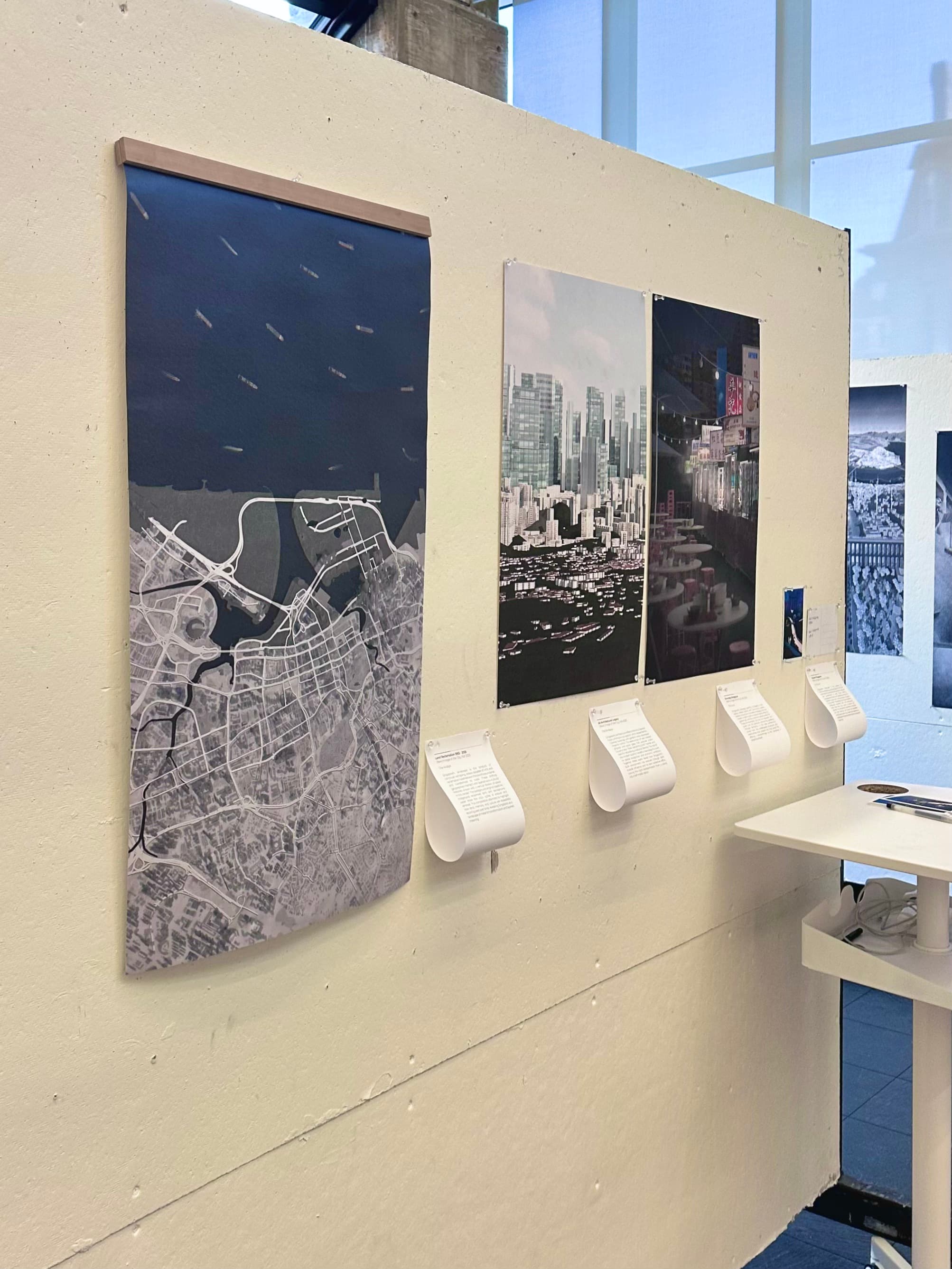
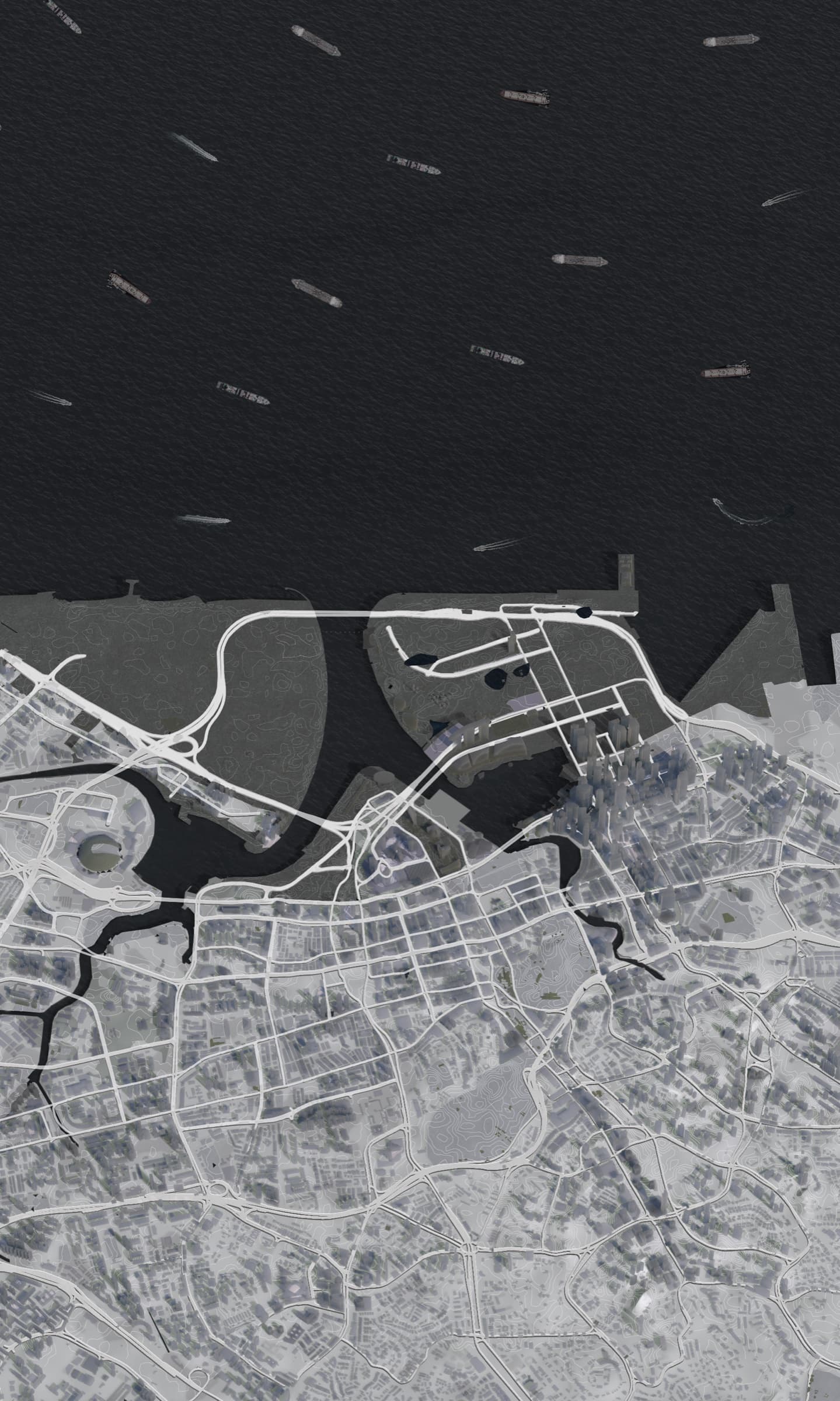
Singapore's landscape is the product of continual reshaping, where decades of infill and reclamation have redrawn the island's boundaries and transformed its coast. These shifting geographies intersect with layered socio-cultural histories. The bottom original coastline, middle reclaimed land, and top water show the city's cycles of erasure and renewal. This composition attempts to highlight how land, memory, and culture are repeatedly reconfigured over time, revealing Singapore as a landscape of material transformation and layered meaning.
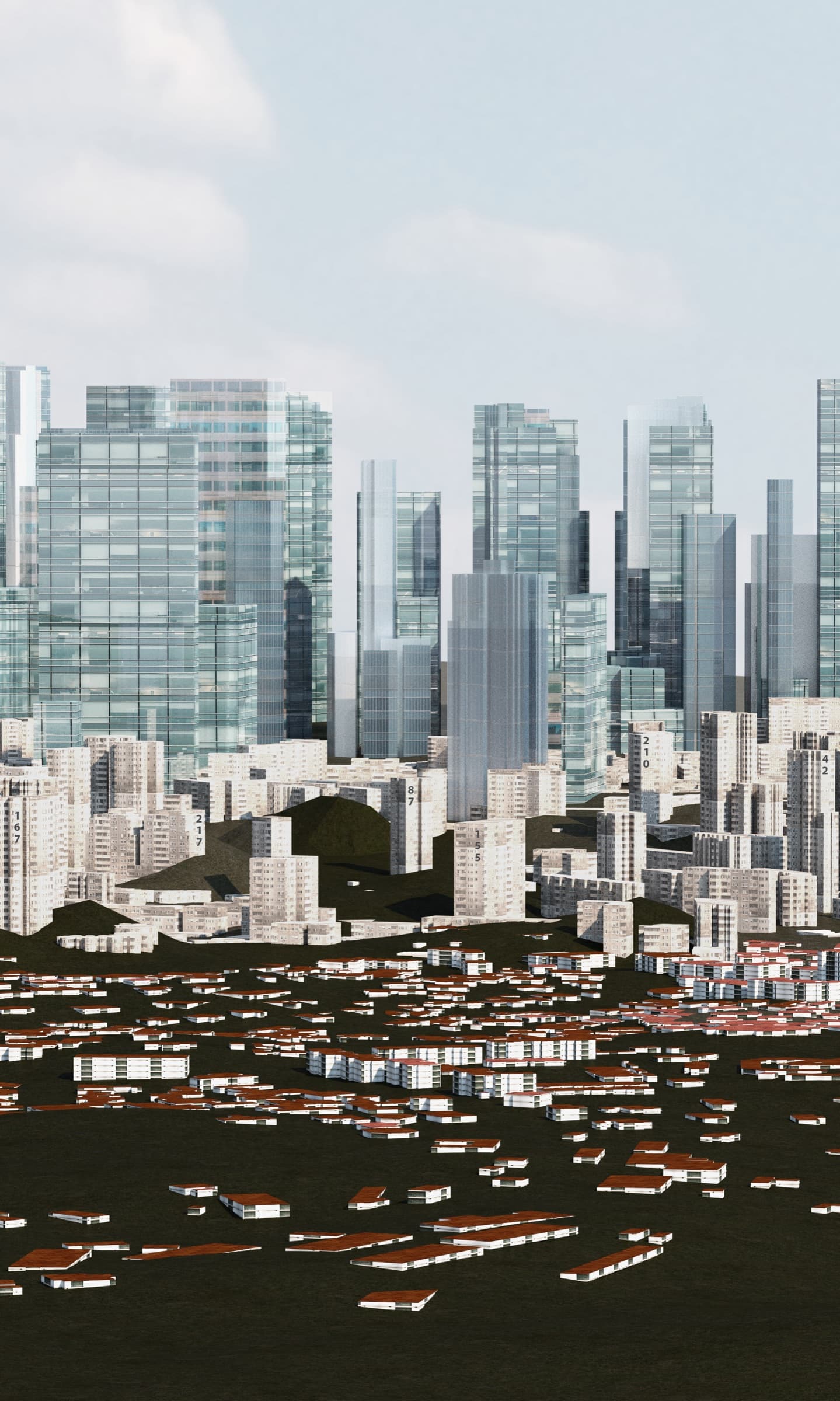
Singapore's architecture reflects the city's layered history of empire, occupation, and independence. Colonial buildings and gardens once expressed imperial control. The destruction of war created physical and social gaps that postwar public housing later filled, becoming both homes and tools for rebuilding a national identity. The rise of the modern skyline marked a new stage focused on global recognition and economic ambition. Together, these layers reveal how Singapore's built environment has evolved through both outside influence and internal collective effort, tracing the city's transformation from a colony into a self-made nation.

Singapore's global identity is constructed through performance and spectacle. The city operates through display, turning movement, light, and celebration into self-definition. Authenticity becomes inseparable from performance, as the city's image is continually remade through the act of being seen. The resulting tension reveals a deeper condition of contemporary urbanism: identity no longer resides in place itself, but in how place is represented and perceived.
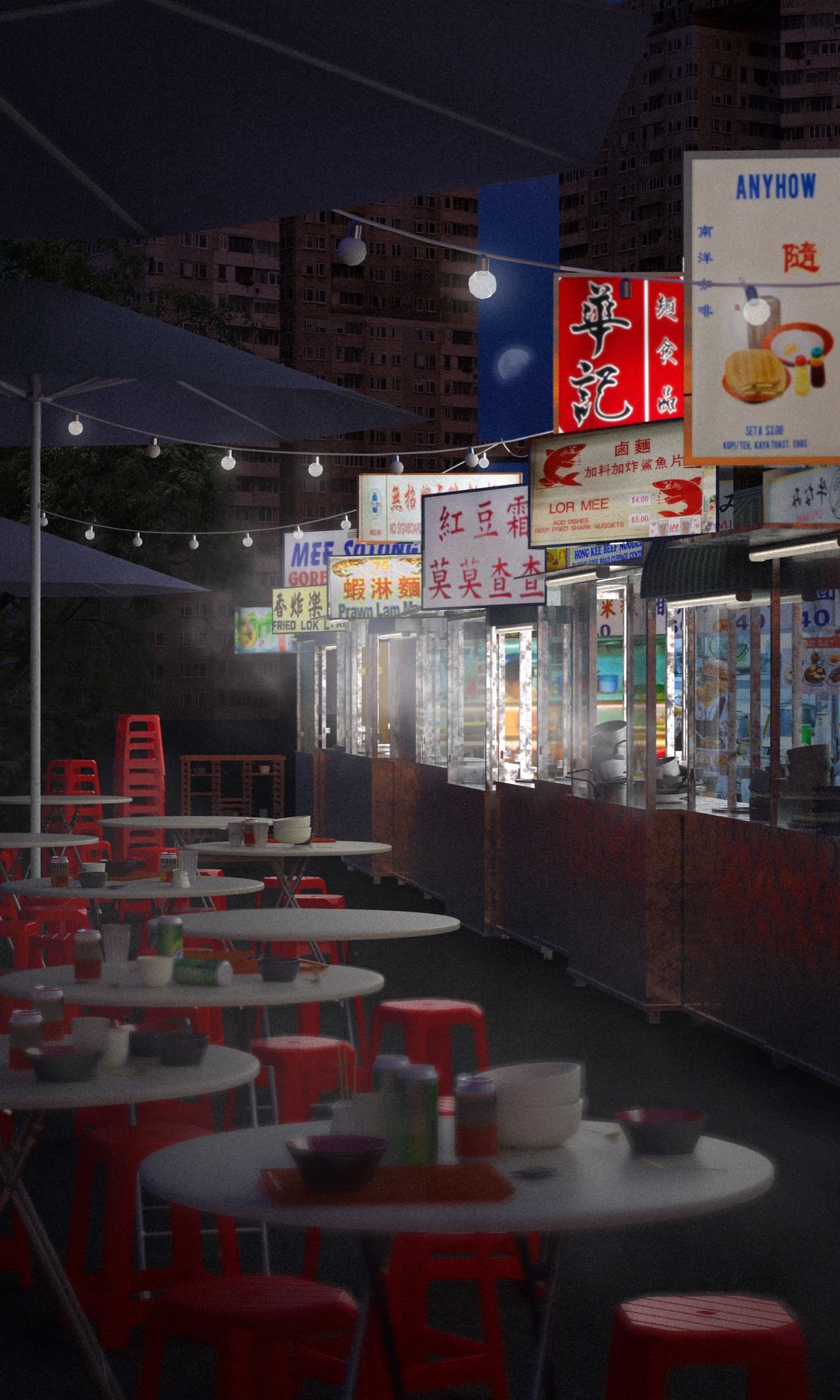
Singapore's everyday identity is shaped in the spaces where routine and community quietly overlap. Away from moments of display, the city reveals a rhythm built on shared habits, informal gatherings, and the work that sustains daily life. These environments blur the line between public and personal, connecting residents through familiarity. In this view, authenticity comes from the understated structures and relationships that support the city's social life, offering a counter image to the narratives it projects outwards.
Singapore's architecture reflects the city's layered history of empire, occupation, and independence. Colonial buildings and gardens once expressed imperial control. The destruction of war created physical and social gaps that postwar public housing later filled, becoming both homes and tools for rebuilding a national identity. The rise of the modern skyline marked a new stage focused on global recognition and economic ambition. Together, these layers reveal how Singapore's built environment has evolved through both outside influence and internal collective effort, tracing the city's transformation from a colony into a self-made nation.
Singapore's everyday identity is shaped in the spaces where routine and community quietly overlap. Away from moments of display, the city reveals a rhythm built on shared habits, informal gatherings, and the work that sustains daily life. These environments blur the line between public and personal, connecting residents through familiarity. In this view, authenticity comes from the understated structures and relationships that support the city's social life, offering a counter image to the narratives it projects outwards.
Singapore's landscape is the product of continual reshaping, where decades of infill and reclamation have redrawn the island's boundaries and transformed its coast. These shifting geographies intersect with layered socio-cultural histories. The bottom original coastline, middle reclaimed land, and top water show the city's cycles of erasure and renewal. This composition attempts to highlight how land, memory, and culture are repeatedly reconfigured over time, revealing Singapore as a landscape of material transformation and layered meaning.
Singapore's global identity is constructed through performance and spectacle. The city operates through display, turning movement, light, and celebration into self-definition. Authenticity becomes inseparable from performance, as the city's image is continually remade through the act of being seen. The resulting tension reveals a deeper condition of contemporary urbanism: identity no longer resides in place itself, but in how place is represented and perceived.